
Human editorial review before publication · Member of the Intelligence.Navy Maritime Intelligence Team · 12 Oct 2026 · 20:18 UTC. Incident verification remains separate.
Research context & editorial review- Original source published
- 12 Oct 2026 · 15:04 UTC
- Analysis reviewed
- 12 Oct 2026 · 17:05 UTC
- Human review
- 12 Oct 2026 · 20:18 UTC
- Added to portal
- 12 Oct 2026 · 16:57 UTC
- Source check
- 12 Oct 2026 · 20:36 UTC
External source reporting used in this assessment
Key judgment
From 2026, methane emitted by large ships on EU-scope voyages enters the EU ETS and methane slip already affects FuelEU Maritime intensity calculations. The operational consequence is vessel-specific: engine architecture, load profile and independently verified measurements can make an LNG ship perform materially above or below the 3.1% FuelEU default. The source is directionally right that methane now has a direct compliance value, but the cash-compliance calendar needs precision: 100% of verified 2026 emissions are surrendered in 2027, while the surrender made during 2026 covers 70% of 2025 emissions.
Methane and nitrous oxide enter maritime EU ETS scope for 2026 emissions, with 100% of verified 2026 emissions surrendered in 2027; the surrender made during 2026 concerns 70% of 2025 emissions.
FuelEU Maritime permits certified actual methane-slip values to replace engine-specific defaults, and two MSC cruise ships have already used that pathway with verified values below 3.1%.
Published measurement campaigns do not support one universal methane-slip factor: reported outcomes differ materially by engine architecture, load, sample and method.
The current international measurement framework is newer than the method cited for the MSC campaign because IMO adopted MEPC.414(84), MEPC.415(84) and MEPC.416(84) in 2026.
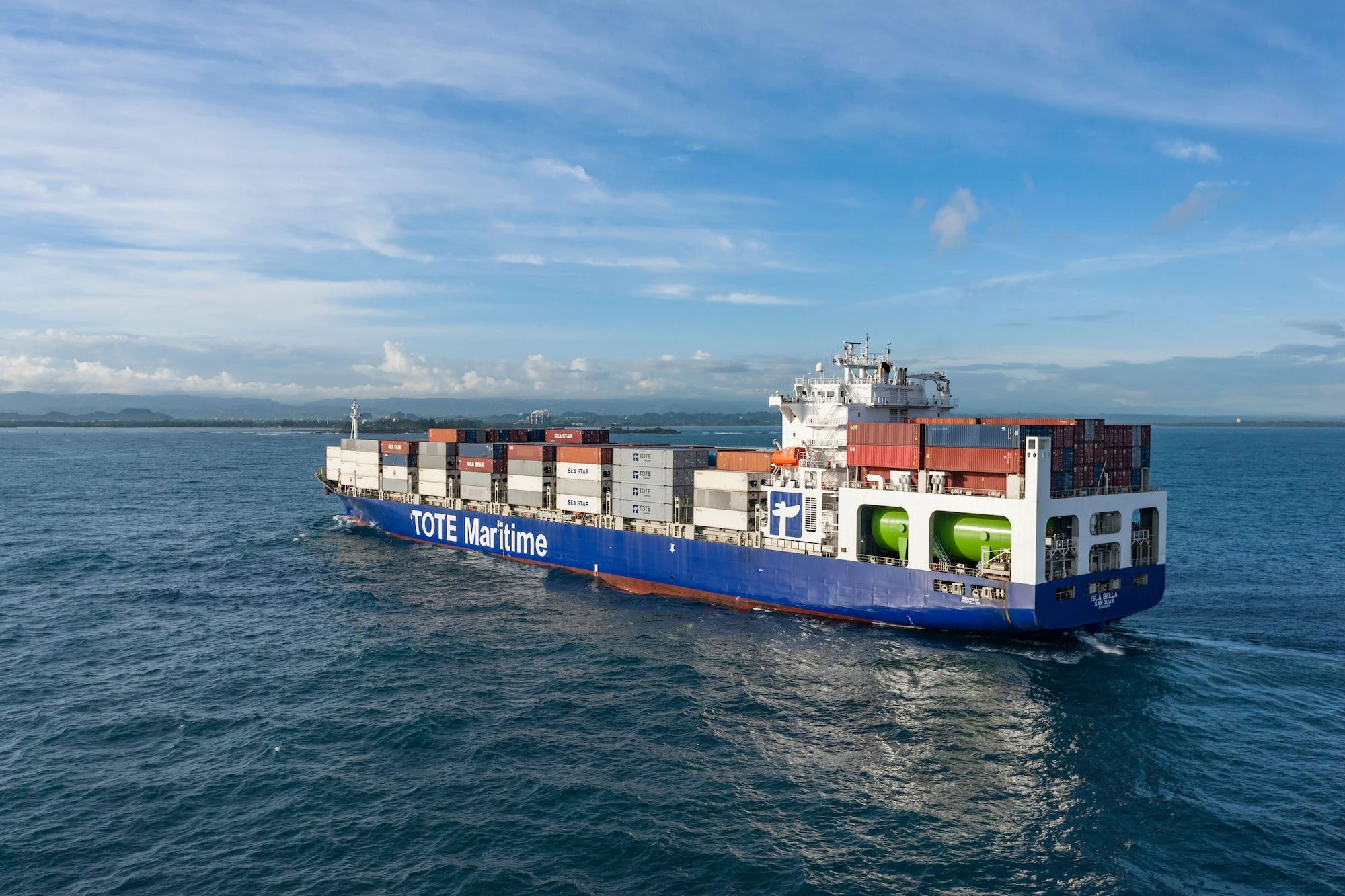 SOURCE PHOTOGRAPH
TOTE's LNG-powered Isla Bella underway
What we learned
The original source presents methane slip as the weakness of the LNG boom. Primary rules and newer evidence show a more discriminating picture. The European Commission permits certified actual slip instead of defaults, creating a commercial incentive to measure and verify efficient engines. MSC's two certified ships reported 1.67% and 1.48%, well below 3.1%. Conversely, the 2024 FUMES campaign averaged 6.4% across 18 low-pressure four-stroke ships, but a 2026 Finnish study of 54 plumes found a 3.0% median for that engine class and 0.3% for low- and high-pressure two-strokes. These are not directly interchangeable fleet averages; they demonstrate that technology, engine load and measurement method determine exposure. IMO also replaced its 2025 measurement guideline with MEPC.414(84) and added separate engine-load and continuous-monitoring guidance in 2026.
Maritime implication
For owners and charterers of LNG-fuelled ships trading to Europe, methane performance moves into fleet valuation, voyage economics, charter cost allocation and retrofit decisions. A modern ship that can certify low slip may reduce FuelEU intensity and ETS exposure relative to the default, while older low-pressure four-stroke assets operating at low load face the greatest risk of an adverse measured factor. Measurement, engine-load records and verifier acceptance therefore become part of the commercial operating chain; ordering an LNG-capable ship alone does not establish its emissions or compliance advantage.
Confidence & evidence limits
MODERATE · EU scope and timing are established by official Commission and legal sources, and the measurement pathway is supported by Commission and IMO guidance. Confidence in a fleet-wide commercial effect is only moderate because available campaigns use different vessel samples, engine mixes, statistics and measurement methods, and no ship-specific fuel consumption, voyage share or allowance price was assessed here.
Evidence & analytical reasoning
Reported · Methane and nitrous oxide enter maritime EU ETS scope for 2026 emissions, with 100% of verified 2026 emissions surrendered in 2027; the surrender made during 2026 concerns 70% of 2025 emissions.[2]
Reported · FuelEU Maritime permits certified actual methane-slip values to replace engine-specific defaults, and two MSC cruise ships have already used that pathway with verified values below 3.1%.[3][5]
Reported · Published measurement campaigns do not support one universal methane-slip factor: reported outcomes differ materially by engine architecture, load, sample and method.[6][7][5]
Analytical inference · Methane performance is becoming an asset-level commercial variable: verification can lower compliance exposure for efficient ships, while older low-pressure four-stroke assets at low load carry the greatest risk of an adverse measured factor.[2][3][5][6][7]
Reported · The current international measurement framework is newer than the method cited for the MSC campaign because IMO adopted MEPC.414(84), MEPC.415(84) and MEPC.416(84) in 2026.[4][5]
Next decision indicators
- European Commission recognition of MEPC.414(84), MEPC.415(84) and MEPC.416(84), and any revision of FuelEU default slip factors.
- Additional flag-state-recognised ship-specific methane files, especially for older low-pressure four-stroke fleets and non-cruise segments.
- Verified 2026 methane data and related allowance exposure disclosed during the 2027 compliance cycle.
- Retrofit, engine-control or operating-load measures that demonstrate independently verified reductions rather than manufacturer estimates.
- Charter-party clauses allocating ETS and FuelEU costs where the owner and fuel or voyage decision-maker differ.
Publication history · 3 captured versions
Loading captured versions…
Evidence & references
- [1] Shipping’s LNG Boom Faces a Methane ProblemSource account
- [2] FAQ – Maritime transport in EU Emissions Trading System (ETS)Candidate linkage · unconfirmed
- [3] Questions and answers on Regulation (EU) 2023/1805Candidate linkage · unconfirmed
- [4] Index of MEPC resolutions and guidelines related to MARPOL Annex VIContext reference
- [5] Bureau Veritas supports MSC Cruises’ independent verification of actual methane emissionsCandidate linkage · unconfirmed
- [6] Fugitive and Unburned Methane Emissions from Ships (FUMES)Context reference
- [7] Methane and carbon monoxide emissions originating from LNG-powered ships measured at a remote marine stationContext reference
Evidence scope & unresolved questions
- The 2024 and 2026 measurement studies use different samples, statistics and methods; neither establishes a fleet-wide factor for all LNG ships.
- No ship-specific fuel consumption, EU voyage share, EUA price, charter allocation or FuelEU pooling strategy was assessed, so no monetary exposure is estimated.
- The extent and timing of EU acceptance of the 2026 IMO measurement, load-monitoring and CEMS guidelines under each verification pathway were not established.
- Manufacturer and industry-coalition performance claims remain first-party evidence unless supported by independently accessible measurement files.
AI-assisted research, followed by recorded human editorial approval. Approval is not independent verification of the incident.. AI-assisted synthesis with recorded human editorial review; event verification remains limited by the attached sources.
Shipping’s LNG Boom Faces a Methane Problem: Indexed excerpt; live page content was not verified. The publisher page could not be opened directly; a detailed indexed excerpt was available. Numerical and regulatory claims were checked against primary or first-party sources.
FAQ – Maritime transport in EU Emissions Trading System (ETS): Indexed excerpt; live page content was not verified. Commission FAQ text was reviewed through the search index; it is guidance and does not replace the underlying Directive.
Questions and answers on Regulation (EU) 2023/1805: Indexed excerpt; live page content was not verified. Commission Q&A text was reviewed through an indexed excerpt; the full compliance file and any verifier-specific interpretation were not examined.
Index of MEPC resolutions and guidelines related to MARPOL Annex VI: Indexed excerpt; live page content was not verified. The official resolution index and meeting summary were reviewed; the full technical annexes and their acceptance under each EU verification pathway were not assessed.
Bureau Veritas supports MSC Cruises’ independent verification of actual methane emissions: Indexed excerpt; live page content was not verified. A classification-society announcement was reviewed; raw measurements, engine-load series and the flag-state compliance files were not available.
Fugitive and Unburned Methane Emissions from Ships (FUMES): Indexed excerpt; live page content was not verified. The report summary and indexed findings were reviewed; results apply to the sampled engine class and campaign and should not be extrapolated unchanged to every LNG ship.
Methane and carbon monoxide emissions originating from LNG-powered ships measured at a remote marine station: Indexed excerpt; live page content was not verified. The peer-reviewed abstract and bibliographic record were reviewed; the full dataset is available only on request, and median plume estimates are not directly equivalent to certified ship-specific FuelEU factors.